Skincare, shampoos, mouthwash: An expert in skin, hair and oral care explains what’s best for you
We got a scientist, who leads product development in skin, hair and oral care, to answer your questions on topical skin vitamins, sulphate-free shampoo and body wash, and why alcohol isn't necessary in mouthwashes.
(Photo: iStock/Mykola Sosiukin)

This audio is generated by an AI tool.


From arbutin to zinc, and all that cetylpyridinium chloride and sodium lauryl sulphate in between, we don’t blame you for thinking you might need a PhD in Chemistry to decipher the ingredient list on your bottle of moisturiser, shampoo or mouthwash.
And what about the baffling array of products at the store? Can sulphate-free shampoo and body wash really do the job? It’s enough to make you want to throw your hands up in exasperation in the personal care aisle.
Well, who better to provide the science to those conundrums than a scientist? Keshan Gunasinghe, the head of R&D APAC at Kenvue, which is a spin-off from Johnson & Johnson, will help you cut through the jargon on skin vitamins, what the alcohol in mouthwash is really for (not to kill germs apparently), why the squeaky-clean feel from your shampoo and body wash isn’t great, and more.
TRENDS ASIDE, WHAT SHOULD A BASIC SKINCARE ROUTINE LOOK LIKE?
Cleanser, moisturiser and sunblock will do just fine for most people, said Keshan, unless there is a skin barrier impairment (in those with eczema, for example), ageing and/or damage from overexposure to the sun, pollution and climate changes. “When it comes to skincare, more is definitely not better. Skincare does not have to be complicated to be effective. It is important to maintain a balance of the skin’s pH level.”
His tip: Focus on one or two hero products in your routine. “It can be a five-step or three-step regime but the non-negotiables are cleansing, moisturising and sunscreen. If you have a little more bandwidth, throw in a toner or a serum.”
I STILL HAVE LEFTOVER PRODUCTS FROM PREVIOUSLY FOLLOWING THE 10-STEP KOREAN SKINCARE ROUTINE. WHAT’S THE BEST WAY TO FINISH THEM UP?
“The long-term usage of too many mixed products could result in hyper-skin sensitivity and can lead to issue like breakouts and skin irritability like itch and dryness,” said Keshan.
If you have plenty of leftover products, try alternating serums and essence, he recommended. “Exfoliating scrubs, peels and pads can be done once or twice a week. Instead of applying a daily sheet mask, use it once or twice a week or alternate with your sleep mask.”
WHY ARE ALCOHOL-FREE MOUTHWASHES BETTER? DON’T WE NEED ALCOHOL TO KILL GERMS?
If you’ve used an alcohol-based mouthwash before, you’d recall the burning sensation and dry mouth that follow. Not pleasant at all.
But did you know that the purpose of alcohol in a mouthwash is not to kill germs in the first place? “Alcohol usually acts as a solvent for dissolving the active ingredients, and to stabilise and preserve the formula,” said Keshan.
Besides, you don’t always need alcohol to do that as the many non-alcohol mouthwashes prove. Such mouthwashes use a combination of other ingredients such as emulsifiers and surfactants to completely dissolve the active ingredients, according to Keshan.
As for how these non-alcohol mouthwashes take out germs, different brands have different strategies, namely chlorhexidine gluconate (only for prescription mouth washes), cetylpyridinium chloride and essential oils, he said.
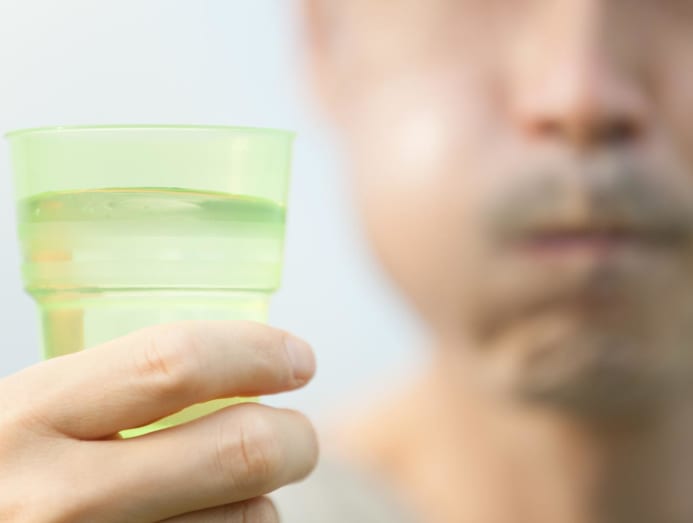
“Among the three, only essential oil-based mouthwashes have been recognised by the American Dental Association for efficacy and safety. In addition, essential oil-based mouthwashes have been shown in clinical studies to have no negative effect on saliva production and no feeling of dryness in the mouth by patients.”
Also, choose a mouthwash with fluoride to restore enamel, and strengthen teeth against cavities and tooth decay, he advised.
I KNOW THAT SULPHATE-FREE SHAMPOOS AND BODY WASHES ARE KINDER TO SKIN BUT I LIKE THE SQUEAKY-CLEAN FEEL. CAN I COMPENSATE WITH A HAIR CONDITIONER AND BODY MOISTURISER?
Sulphates such as sodium lauryl sulfate and sodium laureth sulfate are common degreasers found in many shampoos, facial cleansers and body washes. You’ll know of their addition when the product you use foams a lot.
However, “it is a myth to think that more lather gives a more thorough cleanse and this is not true”, said Keshan. “What matters most is that your hair (or body) is free from dirt, dead cells and grease (after washing).”
To be fair, sulphates do remove dirt and oil effectively – but maybe a little too well as they can also leave your scalp and skin irritable, and your hair dry and frizzy. You’re not a burnt, greasy wok that needs intense scrubbing.
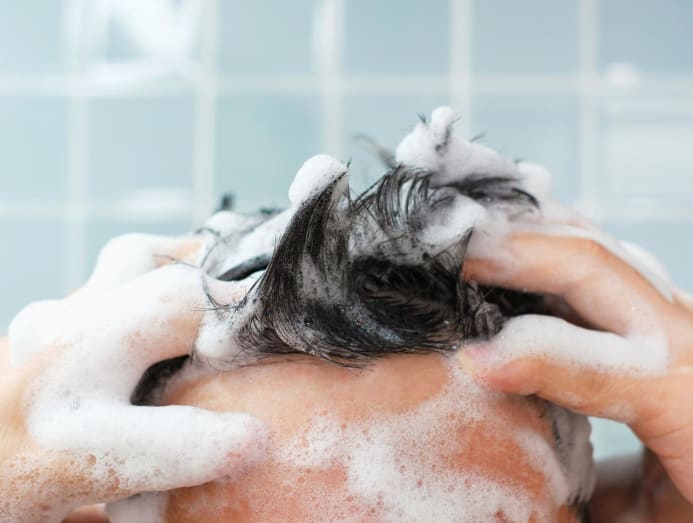
“Think of washing your hair like washing your face. It is a necessary part of your routine but overdoing it can unintentionally upset your scalp’s natural balance of healthy oils.” So, it is better to not over-cleanse in the first place – and then have to make up for the damage. Moreover, “overusing or not rinsing off hair conditioner well can damage hair”, he warned.
How do sulphate-free alternatives do the job then? Essential oils (they will have to be diluted first with a carrier oil such as argan oil or coconut oil) or natural ingredients such as aloe vera are used in sulphate-free hair and body wash products, said Keshan. “These natural ingredients can remove dirt and grease from your hair just as effectively, and they are much gentler on your skin without stripping away your natural oils.
“This is important for individuals with sensitive skin or chronic conditions like eczema,” he said. Even if you have normal skin, it is good to know that “sulphate-free products help maintain the natural pH balance of your skin and scalp to prevent breakouts and blemishes”.
I WOULD LIKE TO TRY TOPICAL SKIN VITAMINS BUT THERE ARE SO MANY KINDS. HOW DO I DECIDE?
Here’s a cheat sheet to get you acquainted with the basic topical skin vitamins and acids:
Vitamin A
- As seen on labels: Retinol, retinoid, tretinoin and retinoic acid.
- Targets: Fine lines, wrinkles, uneven skin tone, rough skin and dullness.
- How to use: A great anti-ageing combo when used with Vitamin C but do so separately (eg. Vitamin A at night and Vitamin C in the morning) to minimise skin sensitivity. It is also crucial to apply a daily sunscreen and moisturiser as Vitamin A may dry and irritate skin, even when capped at 0.3 per cent in facial products and 0.05 per cent in body products for safety.
Vitamin B3
- As seen on labels: Vitamin B3, niacinamide, niacin and nicotinic acid.
- Targets: Hyperpigmentation, excess oil, weakened skin barrier, inflammation and moisture loss.
- How to use: Morning or night. It pairs well with other skin vitamins and is often formulated with hyaluronic acid for further skin hydration.
Vitamin C
- As seen on labels: Vitamin C, L-ascorbic acid and tetrahexyldecyl ascorbate (THD).
- Targets: A potent antioxidant that defends against environmental stressors such as UV and free radical damage. Helps with dull skin, hyperpigmentation and collagen loss.
- How to use: Use in the morning under sunblock and at night (but not together with Vitamin A). This vitamin is notoriously difficult to stabilise and THD in serums tend to pack the most punch.
Vitamin D
- As seen on labels: Vitamins D, D2 and D3.
- Targets: Weakened skin barrier in eczema and psoriasis, and UV-induced skin ageing.
- How to use: Use in the morning with sunblock, and at night without alpha hydroxy acids and beta hydroxy acids as they are said to deactivate Vitamin D.
Vitamin E
- As seen on labels: Tocopherol, tocopheryl acetate and Vitamin E acetate.
- Targets: Sun damage, dryness and uneven skin tone.
- How to use: Vitamin E is delivered through oil or as an oil, and can be greasy even on its own. Best to use at night or on the body in our climate. May not be suitable for oily skin.
Hyaluronic acid (HA)
- As seen on labels: Hydrolysed hyaluronic acid, sodium acetylated hyaluronate and sodium hyaluronate.
- Targets: Moisture loss, loss of skin elasticity and fine lines.
- How to use: After washing and toning, and before sunblock. The molecule size of HA determines how well absorbed it is by skin. An HA under 500 kDa (unified atomic mass units or daltons) is the best at penetrating skin.
Alpha hydroxy acid (AHA)
- As seen on labels: Citric acid, glycolic acid, lactic acid, malic acid, tartaric acid, hydroxycaproic acid and hydroxycaprylic acid.
- Targets: Dry skin, fine lines, wrinkles, discolouration from scars and age spots.
- How to use: Can be used in the morning or night. Always follow with a sunblock if used in the morning. Start with once or twice a week, and gradually increase the frequency. Don’t use more than one AHA at a time, or combine with BHA to minimise the risk of skin dryness, irritation and sensitivity.
Beta hydroxy acid (BHA)
- As seen on labels: Salicylic acid and citric acid.
- Targets: Oily skin, acne, sun damage and rosacea-related redness. BHA is an oil-based exfoliant and reaches deeper into pores than AHA to remove dead skin cells and excess sebum.
- How to use: Same as AHA.
HOW DO I LAYER TOPICAL SKIN VITAMINS?
One way is to look at the product’s pH, said Keshan. “Your skin's natural pH sits at around 4.5 to 5.5, and the order of skincare products should go from the lowest to highest.”
For example, acidic products (such as pH 3 to pH 4) should always be applied before more neutral ones (pH 5 to pH 7). “Vitamin C, which works at a more acidic level, should be applied before hyaluronic acid, which is formulated over pH 5.”
Another way of layering is to take into account the density and absorption rate of the product. “After cleansing and toner, apply serums first followed by gels, lotions or creams. Oils are usually last to apply due to their higher density,” he said.
BUYER’S GUIDE
Here are some other products you may be interested in, identified by our affiliate marketing team which is separate from CNA's editorial team. If you buy through these links, we may earn a small commission. The editorial team does not select affiliate marketing products. Prices are accurate as of the time of publication.
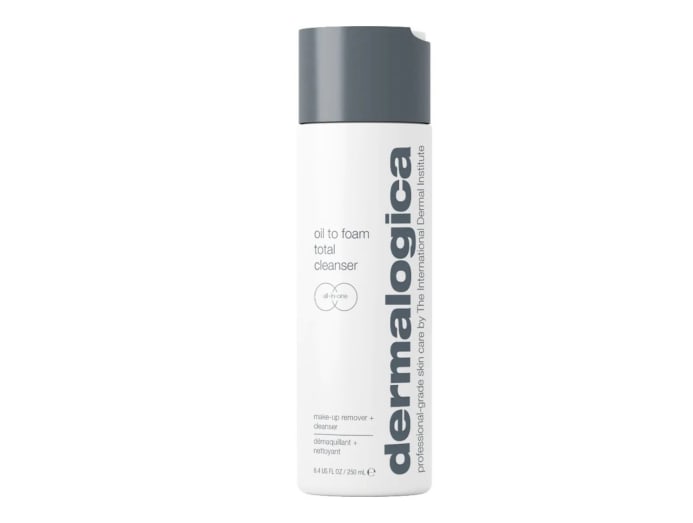
Dermalogica Oil to Foam Total Cleanser (S$92)
This gel-oil pulls double duty as a cleanser and make-up remover that helps dissolve surface oil and dirt when first applied. Splash on more water and it foams up, helping wash away make-up, sebum and sunscreen.
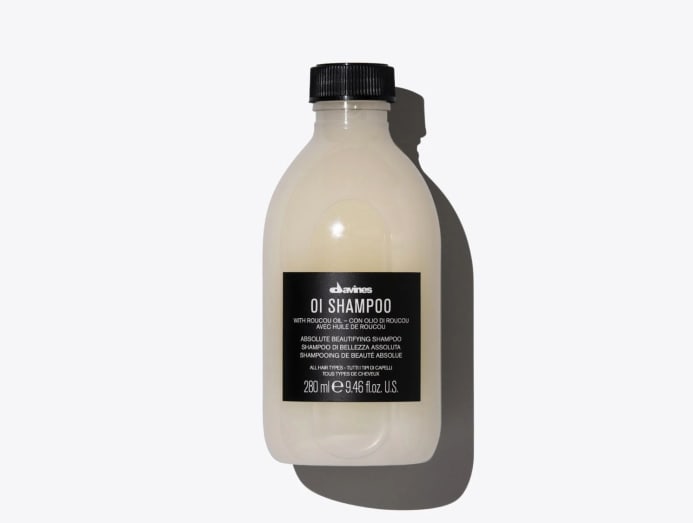
Davines OI Shampoo (S$32.67)
This shampoo contains extract of Roucou Oil, which is said to be rich in beta-carotene. Sulphate and paraben free, this has been formulated to protect your hair from the effects of environmental stressors as well as heat and styling damage. It also helps cleanse and hydrate your hair and scalp.