Emma Maxwell: The interior designer behind Burnt Ends and Araya, two of Singapore’s most striking restaurants
Whether it’s the warm glow of rose quartz at Araya or the moody and theatrical interior of Burnt Ends, Emma Maxwell brings a rebellious spirit and refined eye to every space she touches.
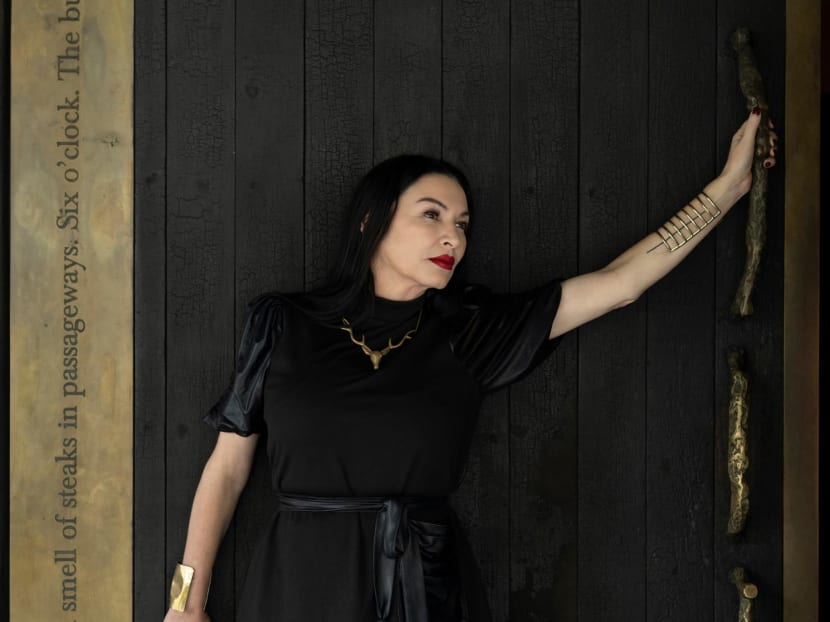
Emma Maxwell. (Photo: PA Jorgensen)

This audio is generated by an AI tool.
A few years ago, Emma Maxwell was in Madagascar and noticed a piece of stone. The Singapore-based interior designer picked it up, not knowing what it was. “That turned out to be rose quartz. The colour was warm, soft, almost glowing. I kept it, knowing I’d use it one day,” said the founder of her eponymous Singapore-based design studio.
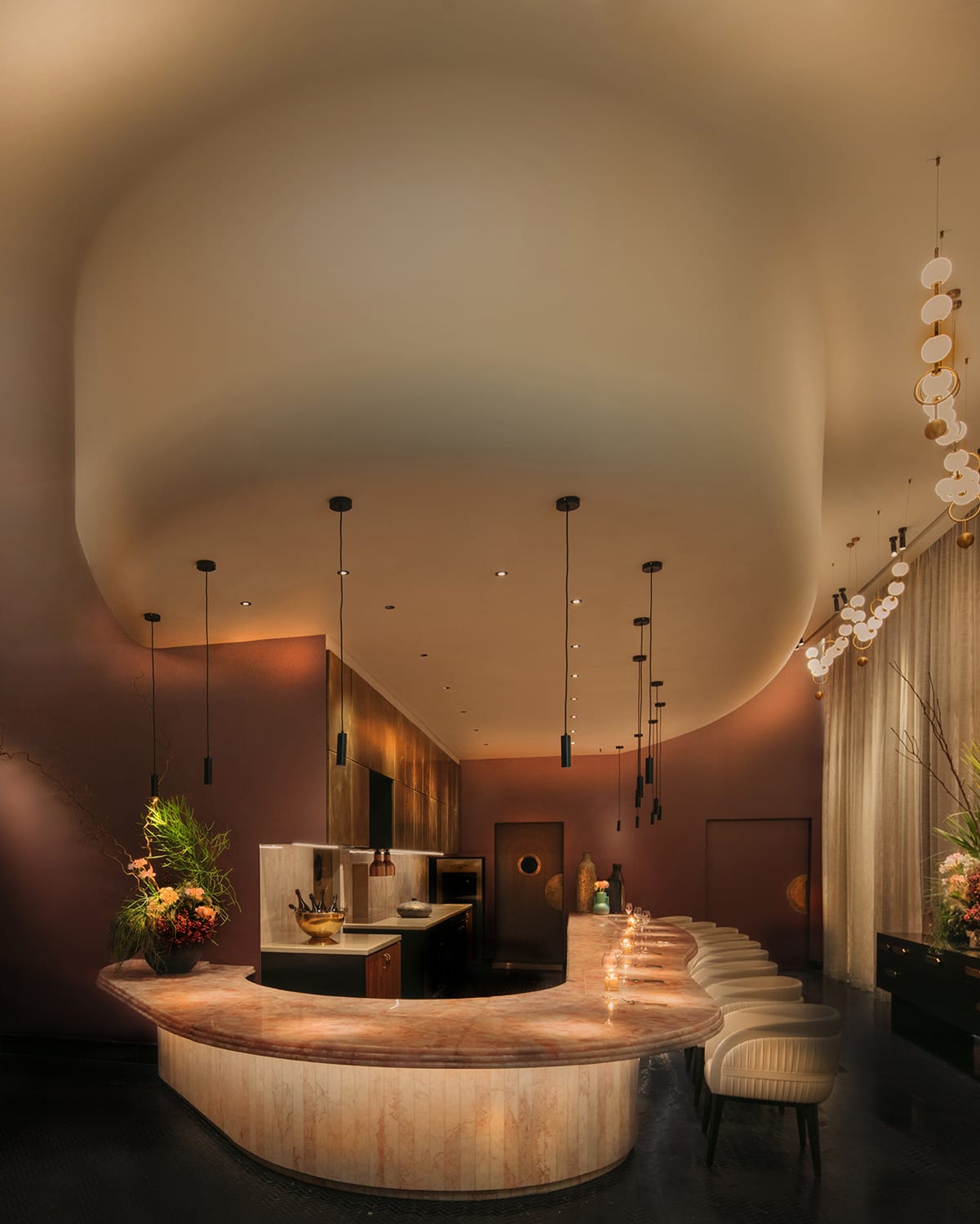
Rose quartz ended up being the main feature in Michelin-starred Chilean fine-dining restaurant, Araya, helmed by chefs Francisco Araya and Fernanda Guerrero. “When Araya came along, I knew where it belonged. We designed a 10m-long chef’s counter from a single slab of rose quartz. It runs the length of the space and sets the tone for everything around it; people respond to it instinctively. It’s also common in Chile where the chefs are from, so it felt grounded,” said Maxwell.
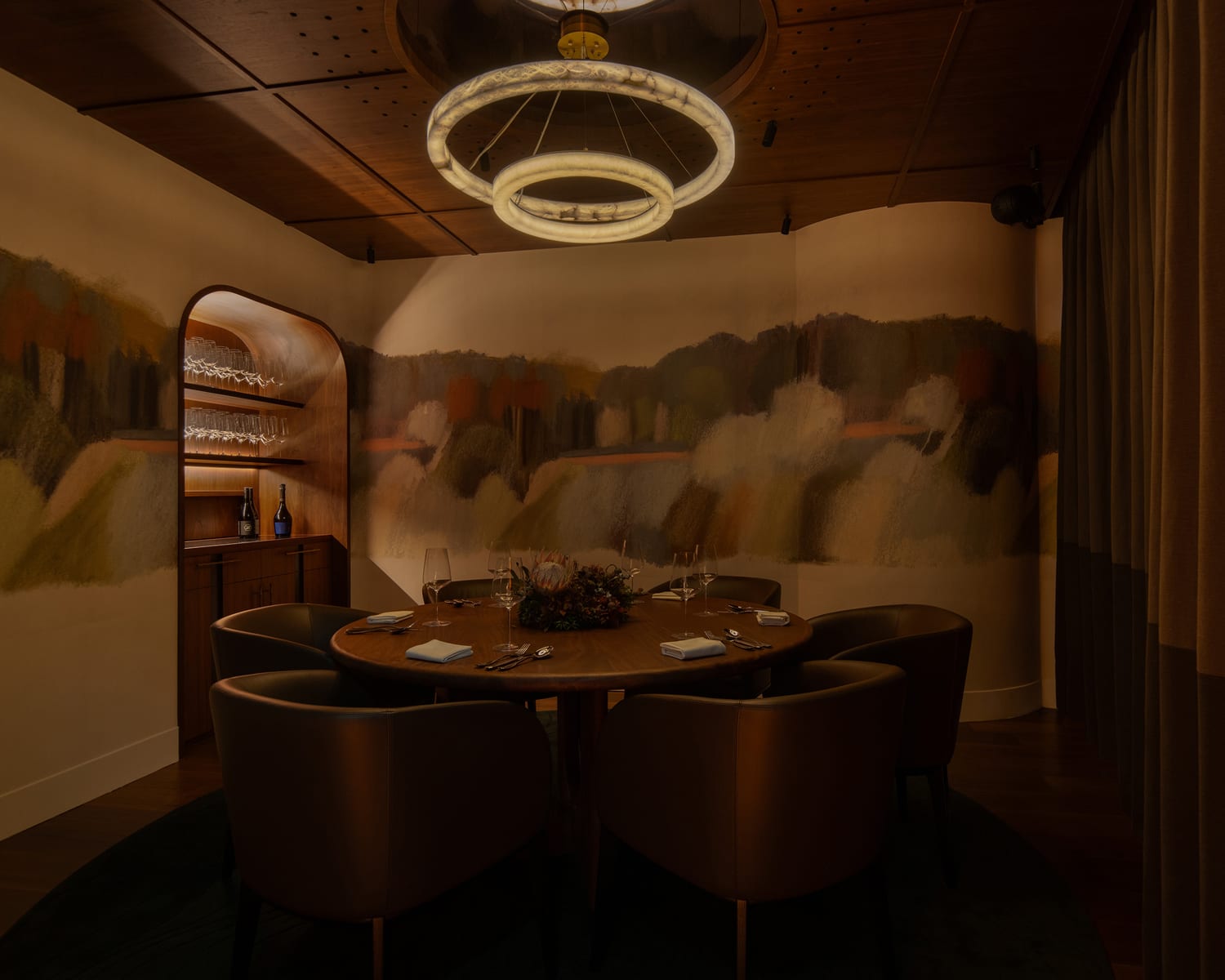
She described the soft ombre colour as evoking a Chilean desert sunset. In the private dining room, a panoramic wallpaper of Chilean mountains further reflects the cuisine. “We layered in as many links to their heritage and food as we could,” elaborated Maxwell.
The Australian-born designer has created many memorable interiors for popular F&B destinations in Singapore. Aside from Araya, she has also designed the Cempedak Island resort, Michelin-starred and World’s 50 Best restaurant Burnt Ends, as well as the recently opened VITIS wine bar.
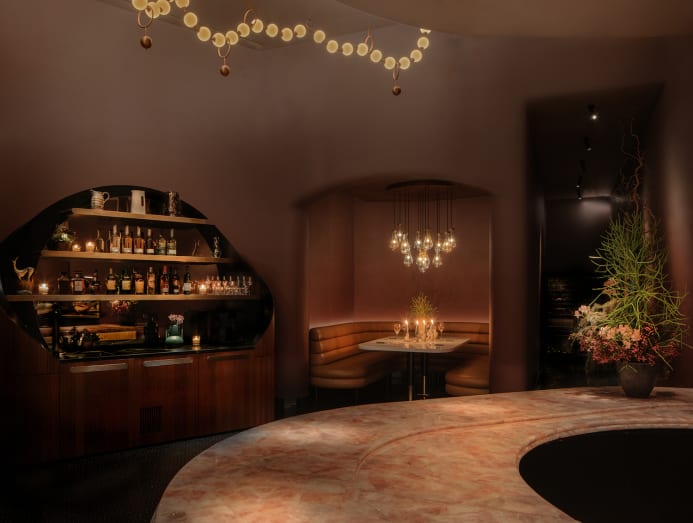
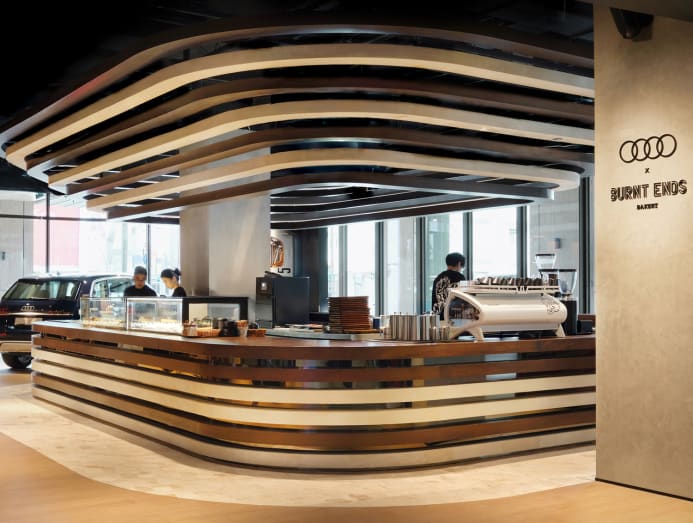
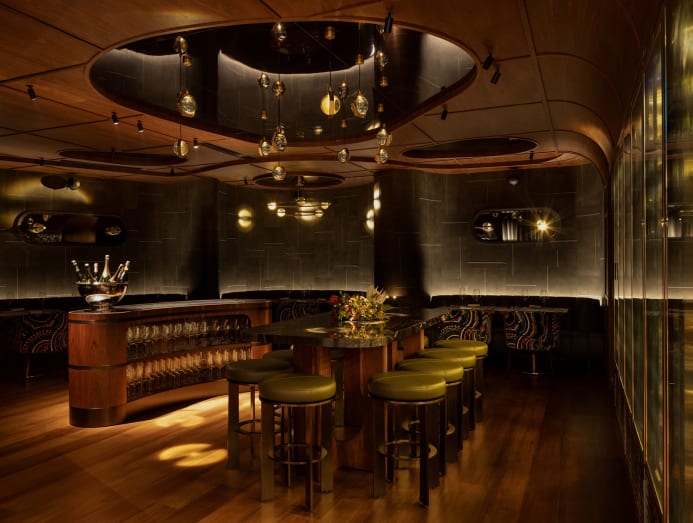
In contrast to the soft, feminine atmosphere of Araya, VITIS is masculine and moody. “At VITIS, I was inspired by the winemaking process – grounded, sensory, precise. The space embraces those elements; it puts people at ease. Sustainability was built in from the start with timber from fallen trees in Singapore, recycled Japanese paper, vegetable-dyed leather. Spotted gum flooring adds warmth and hand-blow crystals cast a soft, flattening glow. Every material was chosen to feel good underfoot, in the hand and for the body,” described Maxwell.
Good spatial design is the crucial missing piece to a holistic, memorable meal experience, she stressed. “People underestimate how much a space shapes feeling through scale, light, sound, material and furniture. It’s not what’s seen, it’s what’s sensed. That’s where memory begins.”
Maxwell has always sensitive to such sensual attributes, even as a child. Born in Melbourne, she grew up in the Shepparton countryside, within the Australian state of Victoria where she competed in horse riding for agricultural shows.
Unlike the horses she controlled, Maxwell pushed against rules and limits. “Anything that tried to contain me; I wasn’t wild, but I never followed,” said the former “punk-goth-indie kid” who was creative in many fields. “I was always drawing, obsessed with music, sneaking into gigs and stage diving into the crowd,” she mused.
The constraining approach of secondary school left the rebel feeling like an outsider. “I didn’t process things in straight lines. I saw space; I felt light shift. Sound carries and materials hold emotion. Long before I had words for it, I could read rooms like people. I was spatially fluent before I even knew what that meant,” Maxwell reflected.
This is still how she designs today, marching to the beat of her own drum, feeling the world around her and then distilling it out through her unique lens. “Twenty years on, that way of seeing still flows into my work,” said Maxwell. “I take everything in at once – light, texture, rhythm and tension – and shape them by instinct, not formula.”
Interior design was a calling that came after she graduated from sculpture studies at RMIT (The Royal Melbourne Institute of Technology) and worked a little in advertising – a job that did not win her soul. After being engaged to design an office, Maxwell discovered the bond with interior design. She came to Singapore to work on a project for the same client and never left.
I first met Maxwell two years ago when she took me on a tour of Burnt Ends, pointing out all the details of the restaurant. With jet-black hair, steely eyes and a robust, confident laughter, Maxwell is not one to be easily forgotten. But she is also somewhat motherly and cocooning, drawing people into her world with a generous, convivial spirit.
Burnt Ends is a special project for Maxwell. She became friends with chef Dave Pynt after becoming a regular patron at the original location in a shophouse at Teck Lim Road. Maxwell was there every Saturday for lunch with friends. “It was our happy place – high-energy, relaxed, never forced. There was always a pulse in the room with the open kitchen, the counter seating, the food, the music, and over the years, great conversation with Dave,” said Maxwell.
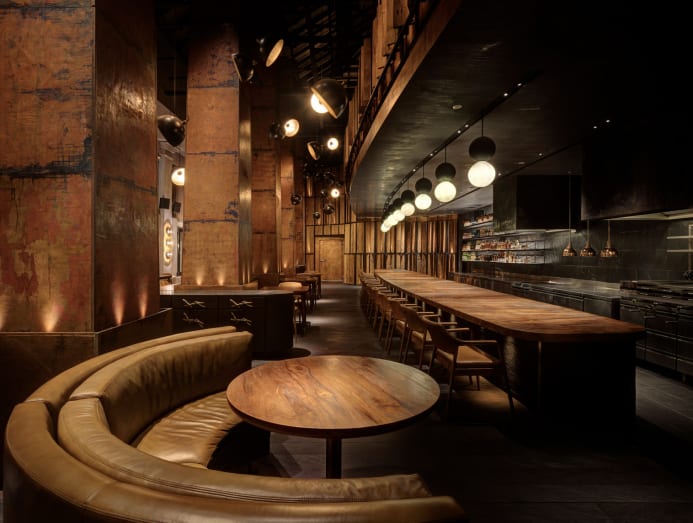
When the restaurant moved to Dempsey Roadchef Pynt asked her to do the interiors. “Dave and I share similar standards and a similar sense of humour. That made the collaboration work. We weren’t even trying to reinvent anything. We just wanted to carry forward that original feeling of Burnt Ends. It always had that intensity of being tight, physical and focused. Every material choice, such as the lava stone, charred timber, 10-million-year-old petrified wood, came from that. These all tie to how Dave cooks with wood, fire and smoke,” Maxwell described.
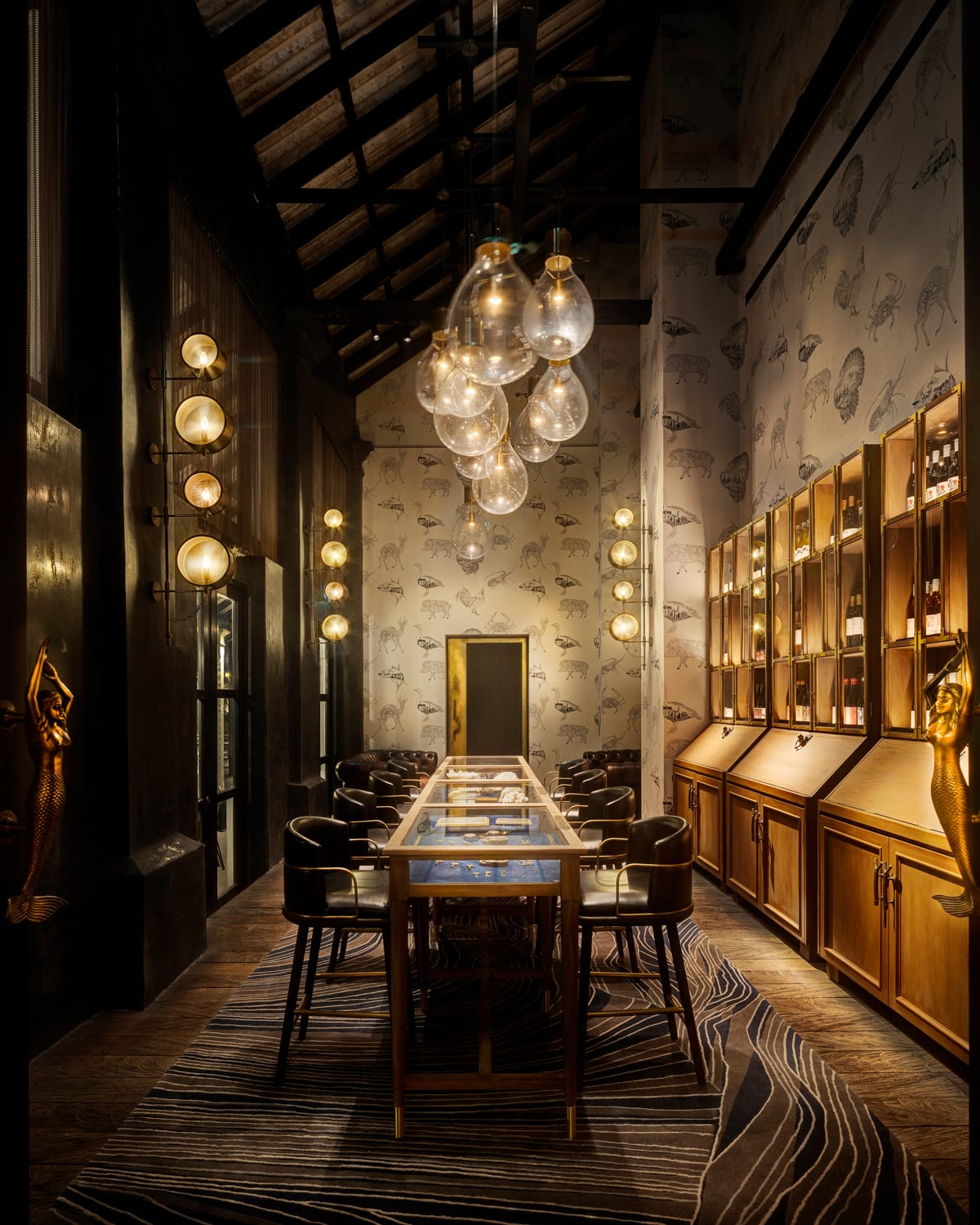
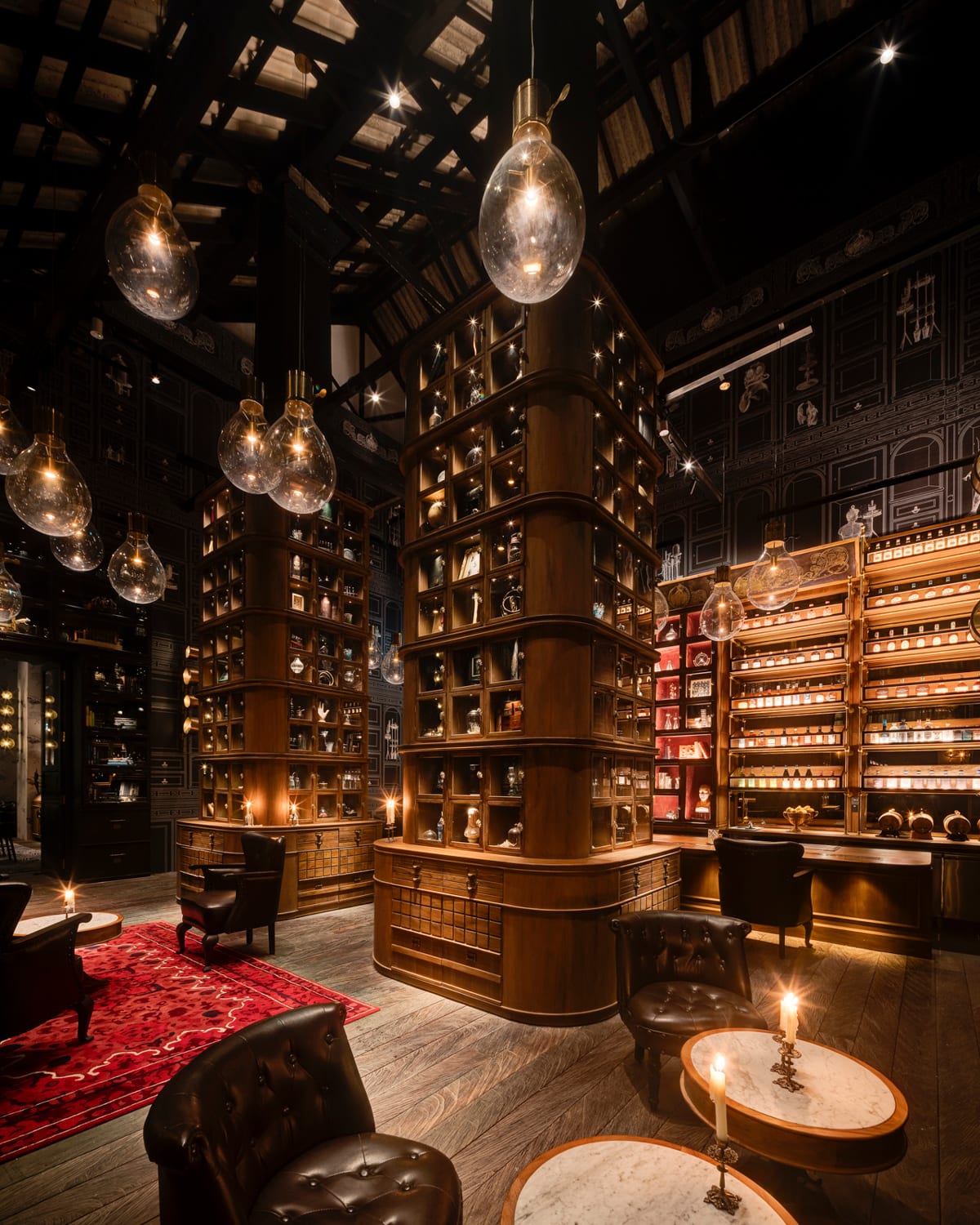
The most important part of the design was how it made people feel. “You’re not just entering a restaurant; you’re stepping into the Burnt Ends world. The atmosphere hits you, holds you and makes you want to stay,” said Maxwell. The partnership was a great one, and she went on to design Audi x Burnt Ends Bakery and GT Bar that opened in February this year at Audi House of Progress along Cross Street.
Here, customers in the showroom and office workers in that area can enjoy the bakery’s famous doughnuts, as well as German-inspired bites like Bavarian beer-battered waffles and currywurst. “The goal was to bring Burnt Ends into Audi’s world seamlessly, letting both identities speak clearly. Audi brings heritage, innovation and sophistication; Burnt Ends brings rhythm and material depth,” said Maxwell on the direction of the sleek space.
Customers want less formality and more flexibility. They also want environments that feel generous, relaxed and convivial. Restaurant owners want customers to linger and spend, and thus have to respond accordingly. “They’re asking deeper questions: How do we create mood? How do we build memory?” stated Maxwell.
She added: “We talk a lot about emotional tempo, how people arrive, how they’re ‘held’ [while in a space], and how they leave. If you design in rhythm with human experience, the space does more than look good; it earns its keep. That’s where we’re headed: Less noise, more meaning.”
Maxwell’s current ethos is similar, shaped after the COVID-19 pandemic. “I struggled deeply. I’m someone who is always in motion between countries, studios and projects. That rhythm fuels my thinking and then overnight, it was gone. There was no team, no site visits, nothing tactile to ground the day. It was confronting,” she said of the difficult period that was a catalyst for introspection and transformation.
Maxwell went back to basics, drawing furiously in her sketchbook. “I couldn’t stop,” remarked the designer who studied painting masters like Caravaggio, Albrecht Dürer and Alberto Giacometti. “Their work sharpened how I see form, light, proportion and feeling. They reset my eye; it gave me a way back. They also changed how I think about presence – both my own and the guests’,” she pondered.
After the pandemic, she continued her travels to seek inspiration. “In Georgia, I visited a 1,500-year-old mountain church built entirely from local stone. There were no ornaments, just mass and stone. It made me think differently about spatial pressure and restraint.” In a Slovenian forest, she thought of how the painter Casper David Friedrich used landscape “to explore the human condition and hold emotion in place; the trees, stone and light – all of that stayed with me.”
In any project, the materials are paramount. “I keep coming back to oiled oak, brushed pewter, slate and thick felt, not so much for how they look but for how they behave; how they influence one’s posture, pace and presence,” explained Maxwell. The experimental and ever-curious designer is now working on a textile blend of stinging nettle fibre and silk, hand-woven in Nepal. “Dyed in layers of mineral pigment, it holds a strange duality. It is dry and raw to the touch, but reflects light like glass,” she described.
Currently, Maxwell is working on two vastly different projects. “One is with a hotel, reworking a legacy property. The other is with a chef, whose precision completely changed how I see space, light, rhythm, movement and response,” she said. Precedents for these and other projects come from spaces around the world that elevate her spirit, are exacting and honest in their intent, and are “not always about perfection but presence.”
One example is La Buvette in Paris. “It is a tiny, low-lit, chef-filled space, with natural wine, raw textures and soft edges. I always end up staying longer than I plan to,” Maxwell shared. Others include Haawm in Bangkok – “six seats, no signage, intimate and focus; you feel as if you’ve walked into a chef’s home” – and Ratana in Milan, which is a former train depot “reworked with integrity; you taste the city in the food, and feel it in the room.”
A Slim Aarons photo of Hotel Cap-Eden-Roc’s pool drew her to the hotel in Antibes, France. “The hotel is the pure spirit of the Cote d’Azur. I’ve been a few times since. It’s exactly where you hope it will be,” said Maxwell. In London, she heads to Core Clare Smyth –“it’s calm and grounded, a fine-dining room that flows” – and she is also a regular at Satan’s Whiskers where she is handed a Negroni and led to her usual seat whenever she’s there. “The vibe is low-key, comfortable and coal. There’s no scene, just good energy,” she said of her local London bar.
These spaces all have something special, which is what Maxwell tries to bring to the spaces she designs. “The hotels, restaurants and bars that last are the ones that feel generous, honest and emotionally sharp, not just styled. That’s what brings people back,” she commented. Every square metre has to earn its place operationally and atmospherically,” she remarked.
“Design isn’t just visual; it’s behavioural. That’s where the difference is made.”