Michelin-starred chef Mauro Colagreco’s first restaurant in Japan is named after the natural cycle of the earth’s bounty
The renowned chef and restaurateur is also confident that the Japanese debut of his culinary philosophy will only amplify his well-established support for diversity and sustainable consumption.
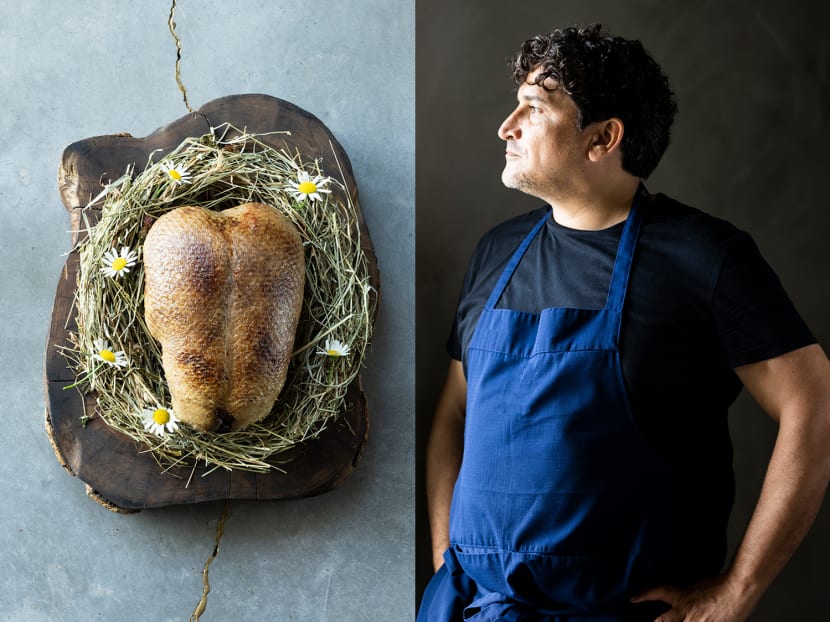
Chef-owner of restaurant Mauro Colagreco of three-Michelin-starred Mirazur in France Riviera was determined to open a fine dining restaurant in Japan with principles of permaculture and dining with a conscience. (Photo: Matteo Carassale)

This audio is generated by an AI tool.
Whether you’re contemplating the general intelligence of a circular economy, versus perhaps the precise ecological merits of circular agriculture – or for that matter, the fundamental purpose of rebirth in a spiritual sense – mankind’s evolving appreciation of the concept has helped us as a species appreciate the magnitude of what it truly means to live well.
So, it’s no surprise that world-renowned Italian-Argentinian chef Mauro Colagreco would choose to name his first restaurant in Japan – a nation distinguished by its cultural celebration of the natural cycle of life – Cycle, a nod no doubt to the principles of permaculture and dining with a conscience that he has championed so well. They are the same reasons he became the first chef to be appointed UNESCO Goodwill Ambassador for Biodiversity just last year.
As chef-owner of restaurant Mirazur in Menton on the French Riviera, Colagreco realised one of his biggest milestones when the restaurant was crowned No.1 on The World’s 50 Best Restaurants list in 2019, in a ceremony held in Singapore. That same year, it became the first three-Michelin-starred restaurant in France to be led by a non-French chef. But there was something more he was determined to do, and that was to open a fine dining restaurant in Japan, named after this culinary philosophy.
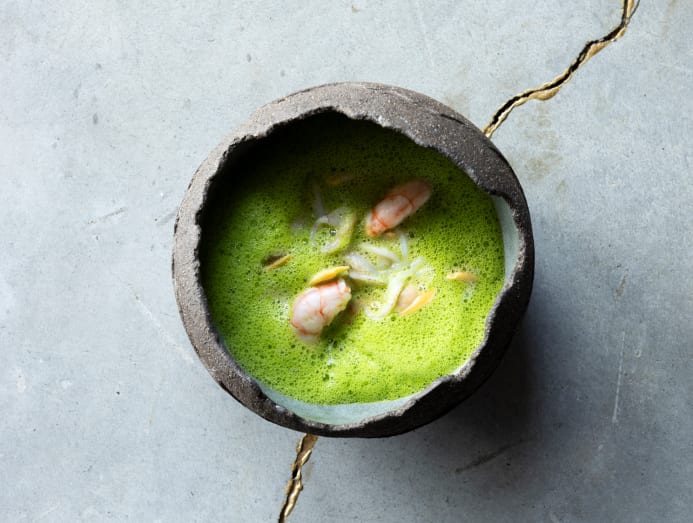

And on Friday, (Oct 27), Colagreco did just that, when his modern French restaurant Cycle open its door for the first time in Otemachi, Tokyo, located right in front of the beautiful gardens of the imperial palace. Just as significant, as one might imagine, is the fact that 35-year-old Japanese chef Yuhei Miyamoto, a former sous chef at Mirazur who has worked with Colagreco since 2019, has been appointed its head chef.
Cycle is named after the circulation (process), said Colagreco, who was quick to note that “following the cycle of nature is our philosophy”. His flagship restaurant, Mirazur, for example, has long been known for the garden-to-table cuisine it serves so elegantly. And suffice it to say, the restaurant’s five organic gardens nearby, which are cared for by no less than 10 gardeners, are always the source of the inspiration. During the COVID-19 pandemic, though, Colagreco began to see how more could be done, and how “we need to follow nature more”, he exclaimed. And so, he began serving dishes designed to reflect the biodynamic agricultural calendar. Guiding the entire tasting menu are four permanent themes – Roots, Leaves, Flowers, and Fruits – while the theme of the day changes every few days. This new approach also affirms his deepening admiration for nature’s ability to continuously provide the best for us.
He added: “Japan has been my inspiration. I was especially influenced by renowned Japanese farmer and philosopher, Masanobu Fukuoka. At Mirazur, at the end of the meal, I would pass diners a ‘nendo-dango’ (or seed bomb), which is clay mixed with various seeds and shaped like a ball, as a gift, to spread the idea of biodiversity.”
Seed-to-plate is in fact the key concept at Cycle, and 90 per cent of the ingredients the restaurant uses come from Japan. The team has already begun tending to small gardens in front of the restaurant and are planning to extend them soon. To supplement the bulk of what they need, they’ve acquired the expertise of the local organic farmers at Naeme farm in Chiba prefecture; among other flora, it specialises in local vegetables, herbs, and edible flowers, and is only a 90-minute drive away from the restaurant.
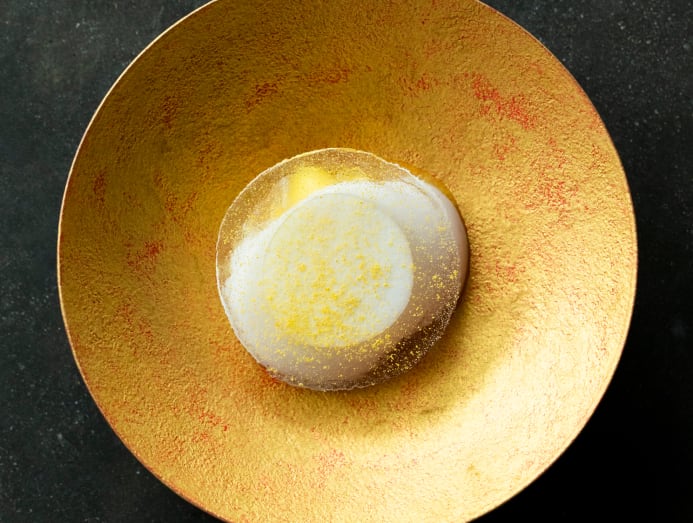
Miyamoto said: “In Menton, every morning, I used to take a walk in the gardens, and I enjoyed (observing) the transition of the plants; like watching almond flowers turn into almond fruit. In Tokyo, our restaurant is in Central Business District, but I’m determined to visit the farm from time to time. The team members take turns visiting the farm, ploughing the field, and removing weeds. It certainly brought me back to the gardens in Menton.”
BEAUTY OF TIMING
There is of course a more delectably significant reason to having their own farm. “We like to (keep track of) the entire cycle of life of each plant and (enjoy) them at the best moment,” he continued, citing as an example the baby green beans they love to farm, which they also prefer to harvest when the beans are small and soft. “You cannot find then like this in regular markets,” Miyamoto asserted.
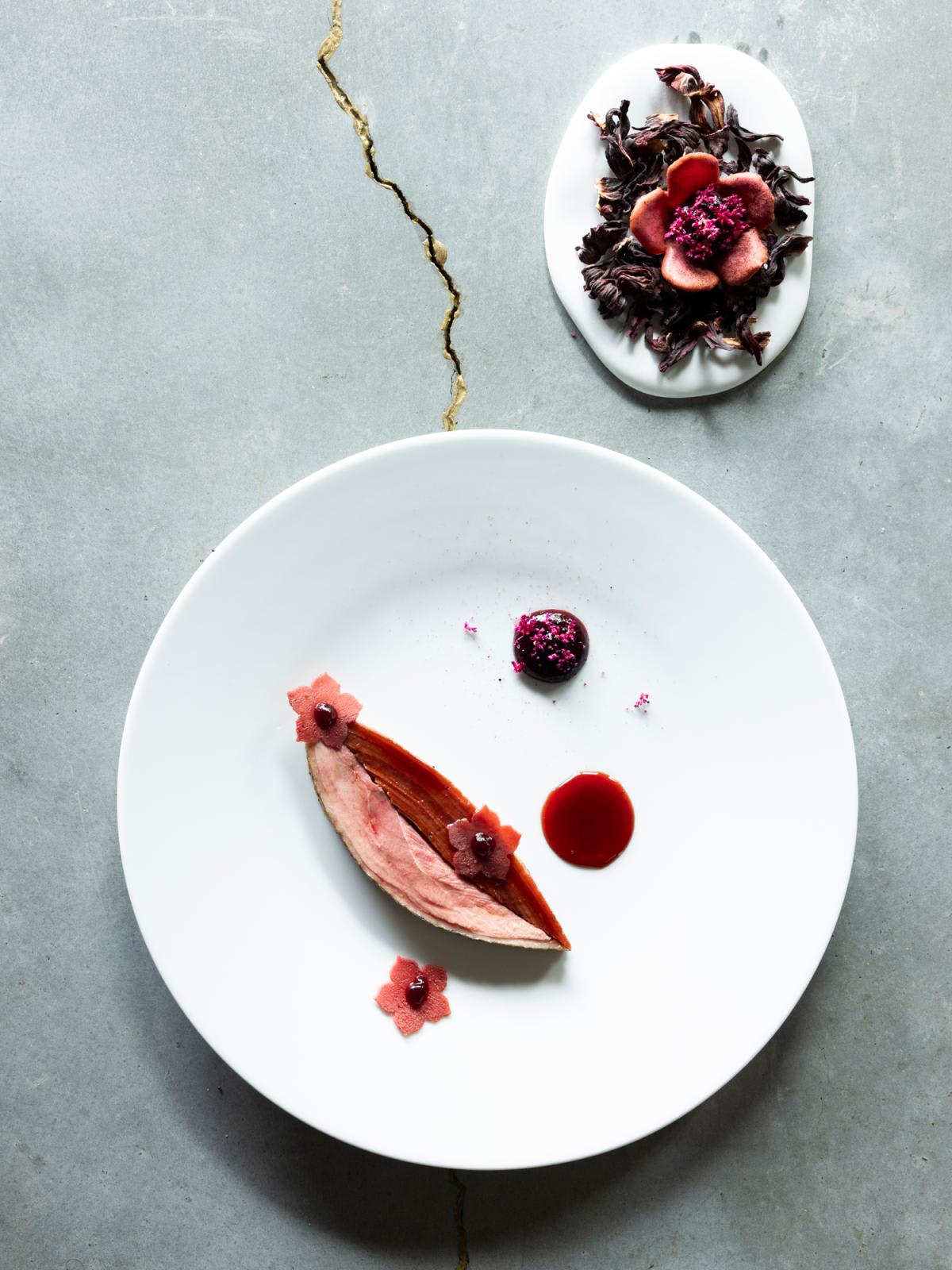
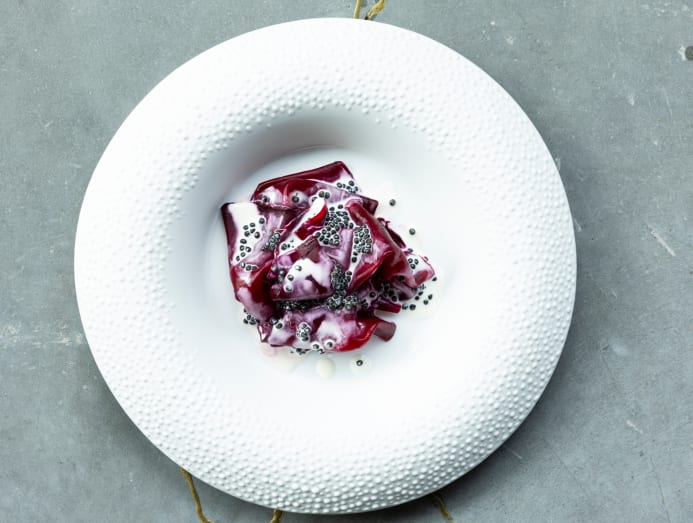
The first menu they are showcasing at Cycle comprises mostly Mirazur classics, including its famous salt-crusted baked beetroot with caviar, and a dish of quince and duck. But Miyamoto has created new dishes that are “fully approved” by Colagreco, such as a dish of rose and deer, which is inspired by the quality rose petals from Okuizumo in the western part of Japan’s Honshu Island.
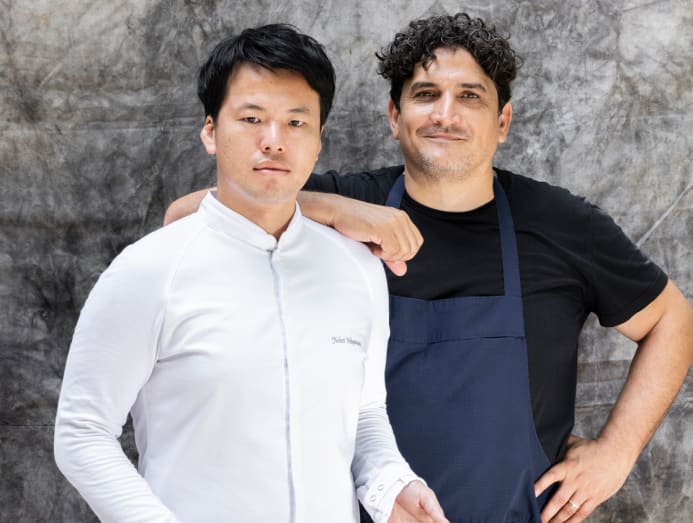
Miyamoto added: “I’ve worked at French restaurants for 15 years, and more than half of my carrier was spent in France. But the menu creation procedure at Mirazur was quite new to me. Everything starts in the garden, meaning with the vegetables. In the morning, Mauro would (arrive) to the kitchen with a bunch of greens, and we would start working on how to best bring out their flavour, and then we determine what kind of protein we should pair with each vegetable.”
Miyamoto also noted how Mirazur’s series of savoury courses now ends with a vegetable dish, and that they would sometimes serve a beautiful artichoke tarte just before the cheese course.
And although he will not be changing the themes that follow the biodynamic agricultural calendar, Miyamoto would like to create dishes that are more whimsical. “I’m determined to follow the four themes, so that diners can appreciate all phases of the plants’ (life cycle).”

PRIZED GLOBAL PERSPECTIVES
As a Japanese, Miyamoto is particularly proud of the quality of fish in Japan. “My grandfather was a fisherman, so I’ve had opportunities to understand fish,” he explained. “Of course, in Menton, we could get amazing fish. But in Japan, we have a history of [using] ‘shinkei-jime’ – [a technique of] destroying the spinal cord of the fish to maintain the quality; and we can age it as well,” he added. This is said to delay the onset of rigor mortis.
Few days before opening, Colagreco and Miyamoto also visited renowned Shinkei-jime Master Hiroki Hasegawa in Kanagawa to learn more about the technique. “After (applying) this process, we can age fish longer; this is the way to appreciate the life of the fish,” Colagreco shared.
And this approach of working with professionals who understand nature, such as botanists and marine researchers, is not new to Colagreco. One of the researchers, Alessandro Di Tizio, who teaches at the University of Gastronomic Sciences in Pollenzo, Italy, had introduced a plant that grows under the sea, called Posidonia. In Mirazur, Colagreco dries it to be used as an aromatic base for aged pigeons.

These days, because of global warmings and the deficit of pure water, seaweed and plants grown in salt water are gaining the attention of the gastronomic world. “In Japan, we have a vast variety of exceptional seaweeds, and I’m thinking to create a unique dish using these, too,” Miyamoto shared.
Diversity is an equally fundamental aspect of Colagreco’s culinary philosophy. The permaculture gardens of Mirazur, for example, boast over 50 varieties of tomatoes. He also sees the world in a holistic way and is resolute about exploring and celebrating the diversity of ingredients from across many parts of the world, which has led to his Japan debut.
Vertically, Colagreco’s focus is firmly on the rich history that nature retains. Evidence of this is found on the restaurant’s walls and tables, which are decorated with parts of ancient trees that were discovered under volcanic debris from an eruption that occurred 2,500 years ago. The cycle of life has existed for billions of years, he muses, before affirming that “we, human beings, are just a small part of it”.
Additional reporting by Don Mendoza